3‑axis and 5‑axis CNC milling.
3-axis milling for pockets and mounting faces. Indexed and simultaneous 5-axis machining for multi-face features, compound angles, and detailed contours.
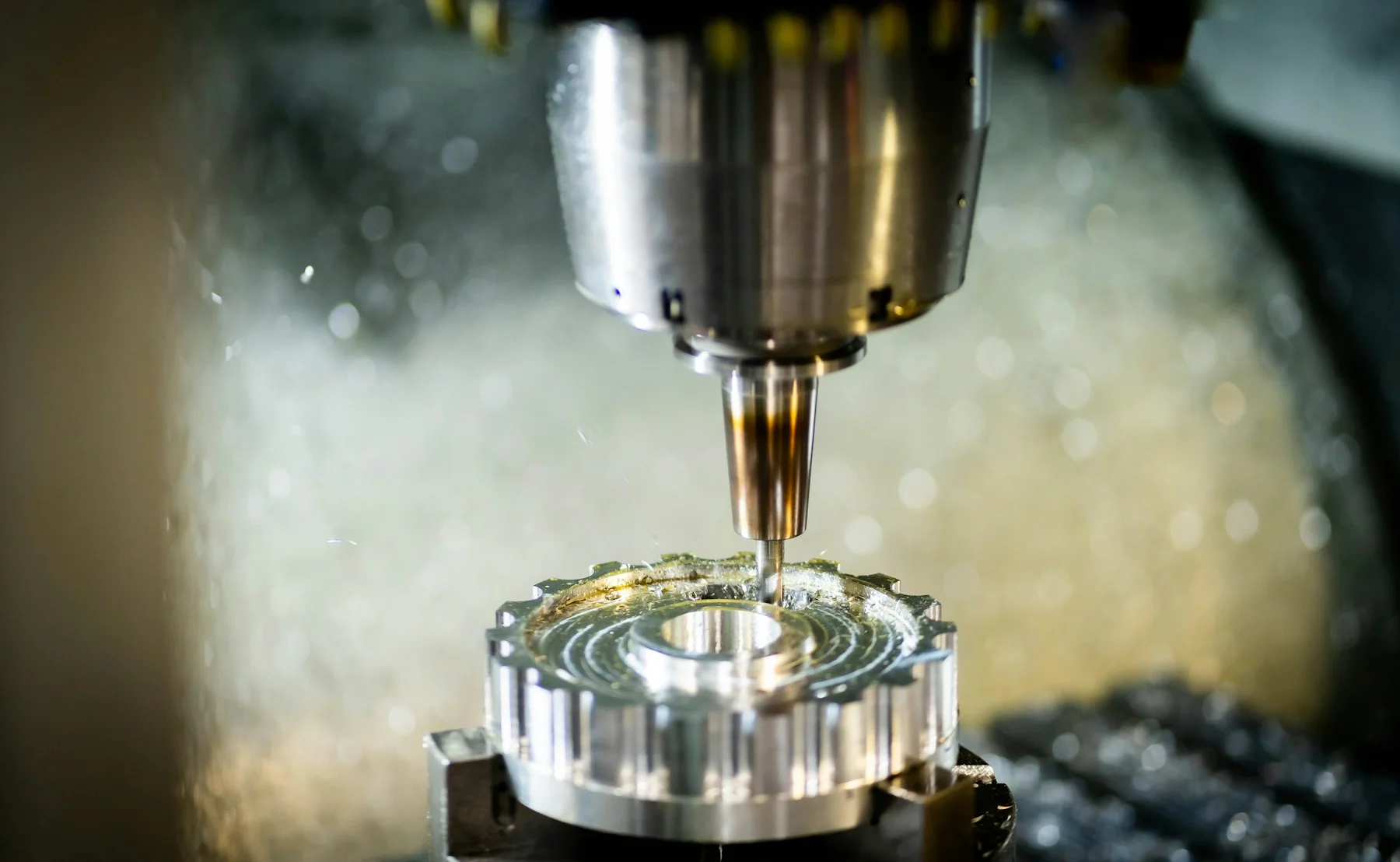
Machine several faces in one setup.
Angled holes, mounting faces, and contoured surfaces may be difficult to reach in a conventional setup.
Five-axis machining can reach several faces without reclamping the part. That reduces handling and can help maintain the positional relationships between features.
Machining specifications.
Check the process, part size, and feature types below before preparing your request.
These specifications describe the fictional concept. They are not a production quotation or guarantee.
| Process | Simultaneous five-axis and indexed 3+2 milling |
|---|---|
| Illustrative capacity | Ø 500 mm × 400 mm work envelope |
| Features | Multi-face features, compound angles, and contours |
| Workholding | Part-specific fixtures and repeatable setups |
| Materials | Aluminum, stainless steel, titanium, engineering plastics |
| Inspection | Drawing-based inspection of critical dimensions |
Achievable tolerances depend on geometry, material, feature size, and setup. Critical requirements are reviewed against the drawing.
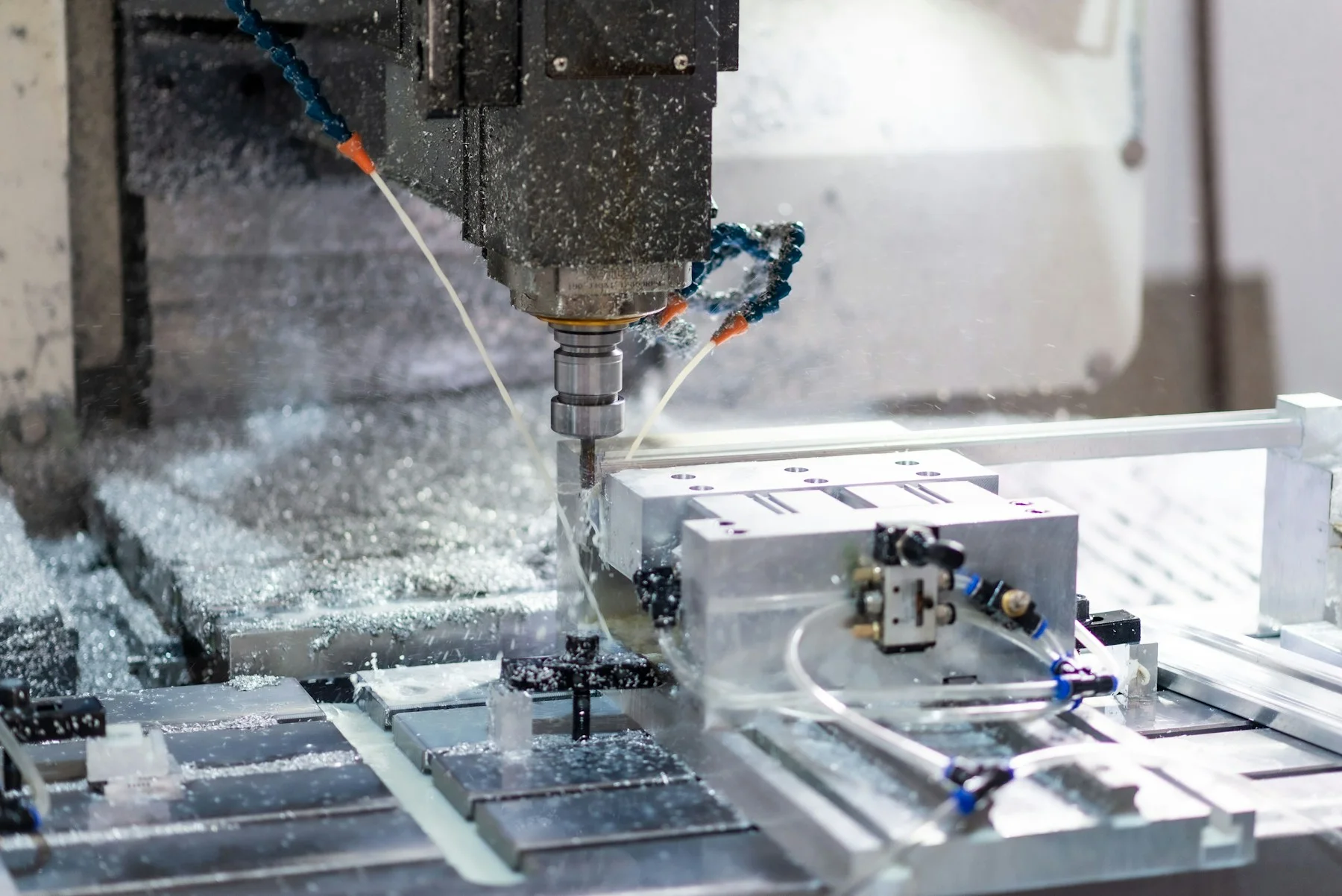
Common milled components.
Typical parts include instrument housings, structural brackets, manifolds, and mounting interfaces. We review tool access and workholding for each drawing.
See the applicationsMachining questions.
When does five-axis machining make sense?
It is useful when several faces, angled features, or complex contours need to be machined. Part geometry and workholding determine whether simultaneous five-axis movement or indexed 3+2 machining is appropriate.
Does five-axis machining eliminate every secondary operation?
No. Some geometry, finishes, threads, or access requirements still need another operation. The route is chosen after reviewing the complete drawing.
What information helps with a quote?
A 3D model and dimensioned drawing are the best starting point. Include material, finish, quantity, revision, target delivery, and any special inspection requirements.
Request a machining quote.
Include the drawing, material, quantity, and required delivery date.
Start your quote